
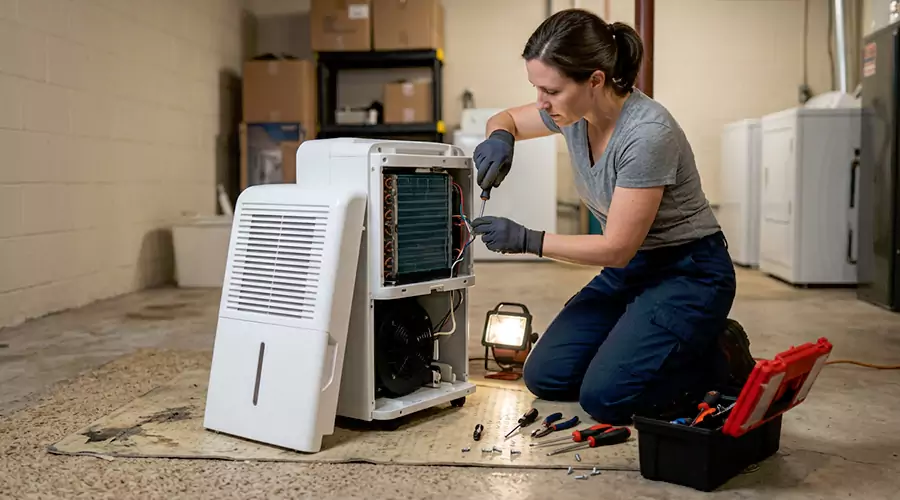
A dehumidifier stops removing moisture when airflow power drainage or cooling parts fail. Dehumidifier repair starts with simple checks before you replace the unit. Clean the filter empty the bucket check the outlet and confirm the room temperature supports normal operation.
Most problems come from blocked airflow frozen coils faulty sensors drain clogs or electrical trouble. A fan compressor sensor or control board needs professional testing when basic checks do not restore water collection.
Quick Answer
Learning how to fix dehumidifier problems starts with the filter bucket outlet and humidity setting. These parts cause many common shutdown and moisture collection issues.
If the unit still runs without collecting water the fan compressor sensor or control board needs inspection. Hire a professional when the unit trips the breaker smells hot or leaks near electrical parts.
Common Dehumidifier Problems and Causes
| Problem | Possible Cause | What to Check First |
|---|---|---|
| Unit runs but collects no water | Low humidity or dirty filter | Room humidity and filter |
| Unit will not start | Power issue or full bucket | Outlet and bucket switch |
| Fan does not run | Fan motor or blockage | Fan area and vents |
| Water leaks | Drain issue or cracked bucket | Hose and water tank |
| Coils freeze | Cold room or poor airflow | Filter and room temperature |
| Humidity stays high | Bad sensor or weak compressor | Sensor and compressor |
Start With Safety
A safe repair starts before you open the unit.
Quick Safety Tips
- Unplug the unit before inspection.
- Keep water away from electrical parts.
- Let frozen coils thaw before cleaning.
- Do not remove sealed system parts.
- Stop using the unit if it trips the breaker.
Unit Runs but Collects No Water
A dehumidifier not collecting water is not always broken. The room can already be dry enough for the selected humidity level.
Set the humidity level lower and run the unit again. Clean the filter because poor airflow stops moist air from reaching the cold coils.
Unit Stops Working
A dehumidifier not working often has no power a full bucket a stuck float switch or a failed internal part. Start with the outlet and test it with another device.
Check the bucket position because many units will not run when the tank is not seated correctly. Look for an error code on the control panel.
Check the Power Supply
A dehumidifier power problem makes the appliance seem dead. Make sure the cord sits firmly in the outlet and check the breaker if the outlet fails.
Inspect the cord for cuts burn marks or loose areas. Do not use the unit with a damaged cord because electrical repair needs proper testing.
Bucket and Float Switch Problems
A dehumidifier not turning on often has a full bucket or misaligned tank. Remove the bucket and place it back firmly.
Check the float switch inside the bucket area. If the switch sticks the unit reads the bucket as full and shuts down.
Clean the Filter First
Proper dehumidifier filter cleaning improves airflow and helps the appliance remove moisture. Remove the filter and vacuum loose dust from the screen.
Wash the filter only when the manual allows it. Let the filter dry fully before placing it back in the unit.
Why Coils Freeze?
Dehumidifier coil freezing happens when airflow is weak or the room is too cold. A dirty filter blocks air across the coils and lets moisture freeze before it drains away.
Turn the unit off and let the ice melt completely. Clean the filter and restart the appliance in a warmer room.
Fan Problems
A dehumidifier fan not working stops humid air from moving through the appliance. The fan pulls room air across the cold coils so moisture can condense.
Listen for humming rattling or silence near the fan area. A blocked fan needs cleaning while a failed motor needs service.
Compressor Problems
A dehumidifier compressor problem prevents the coils from getting cold enough to remove moisture. The compressor creates the cooling action needed for condensation.
Repeated clicking loud humming or extreme compressor heat points to a start relay or compressor fault. A trained technician should test these parts because the sealed system and electrical circuit require proper tools.
Humidity Sensor Problems
A dehumidifier humidity sensor tells the unit when to start and stop. A dirty or faulty sensor makes the unit shut off too early or run longer than needed.
Clean around the sensor area when the manual allows it. Replace the sensor when humidity readings stay wrong after cleaning.
Water Leaks
A dehumidifier leaking water usually has a cracked bucket loose hose clogged drain or uneven placement. Place the unit level on the floor before testing it again.
Check the tank for cracks and inspect the hose on continuous drain models. A loose hose leaks behind the appliance and damages flooring.
Drain Problems
A dehumidifier drain issue stops water from leaving the unit correctly. Remove the hose and check for kinks clogs or loose connections.
Flush the hose with clean water and inspect the drain port for debris. Reconnect the hose tightly before running the unit again.
Basement Unit Problems
Basement dehumidifier repair often starts with airflow drainage and room temperature. Basements collect dust and stay cooler than living areas which reduces performance.
Keep the unit away from walls boxes and storage bins. Use a continuous drain hose when the bucket fills too often during humid months.
Repair or Replace the Unit
Professional small appliance repair makes sense for newer or higher capacity dehumidifiers. A technician tests the compressor fan motor control board sensor and electrical parts.
Replacement makes more sense for an old unit with compressor failure. Compare the repair estimate with the price of a new dehumidifier before approving major service.
Better Humidity Control
A humidity control appliance works best in a closed room. Keep windows and doors shut while the unit runs.
Place the dehumidifier near the dampest area and leave space around the vents. Clear airflow helps the unit remove moisture faster.
Maintenance That Prevents Failure
Regular dehumidifier maintenance helps prevent leaks frozen coils and weak cooling. Empty the bucket before it overflows and clean the filter at least once a month during heavy use.
Wipe dust from the exterior vents and check the drain hose often. Store the unit dry when the humid season ends.
Practical Repair Tips
Use these dehumidifier repair tips before calling for service. Start with the outlet bucket filter drain hose humidity setting fan sound compressor sound and coil frost.
If the unit still fails to collect water professional testing is the right next step. This protects you from replacing good parts by mistake.
When to Call for Service?
An appliance repair service is the right choice when the unit has electrical issues compressor trouble sensor failure or repeated leaks. Call for help when the fan stays off after cleaning or the unit trips the breaker.
Professional service also helps when the compressor runs but the appliance never removes moisture. A technician identifies the failed part and gives you a clear repair or replacement recommendation.
Final Thoughts
A dehumidifier stops working because of dirty filters blocked airflow full buckets drain trouble frozen coils power issues fan failure sensor faults or compressor problems. Start with simple checks before assuming the appliance has failed.
Clean the filter empty the bucket check the outlet inspect the drain and lower the humidity setting. Schedule service when the appliance still fails to collect water or shows electrical warning signs.